

What it is
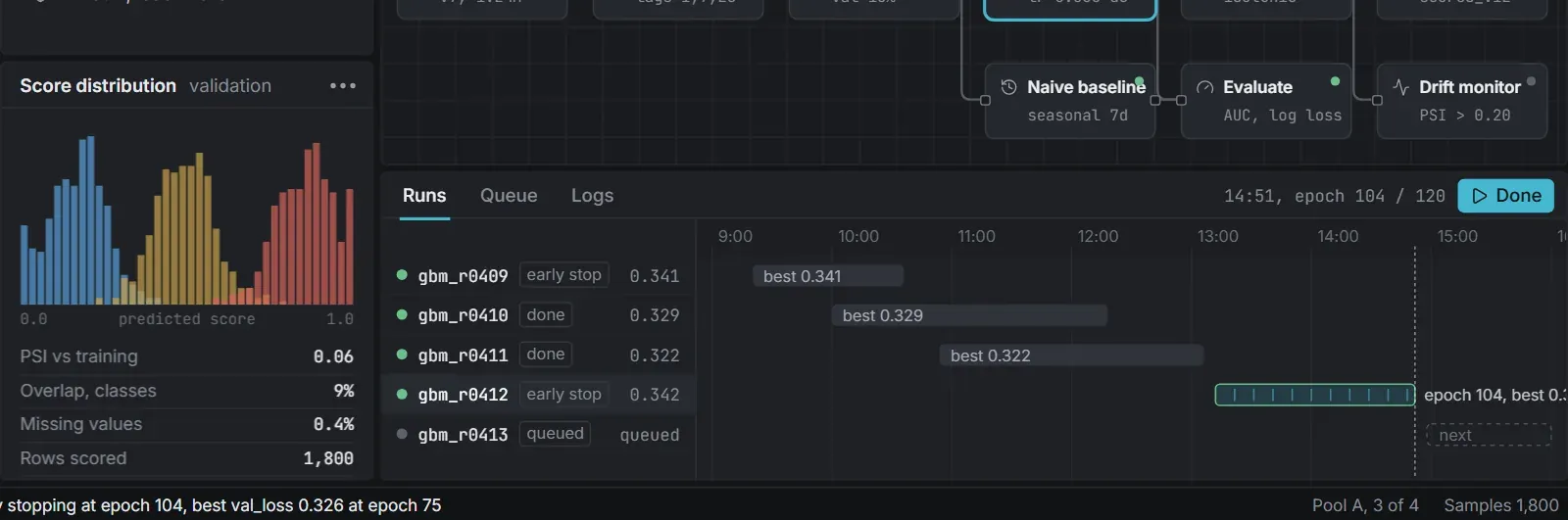
Modelling work usually lives in notebooks, scripts and spreadsheets of results that nobody else can follow. The studio puts it in one place: the datasets and their versions, the pipeline from raw table to scored output, every run with its settings and curves, and a view of what the model actually learned.
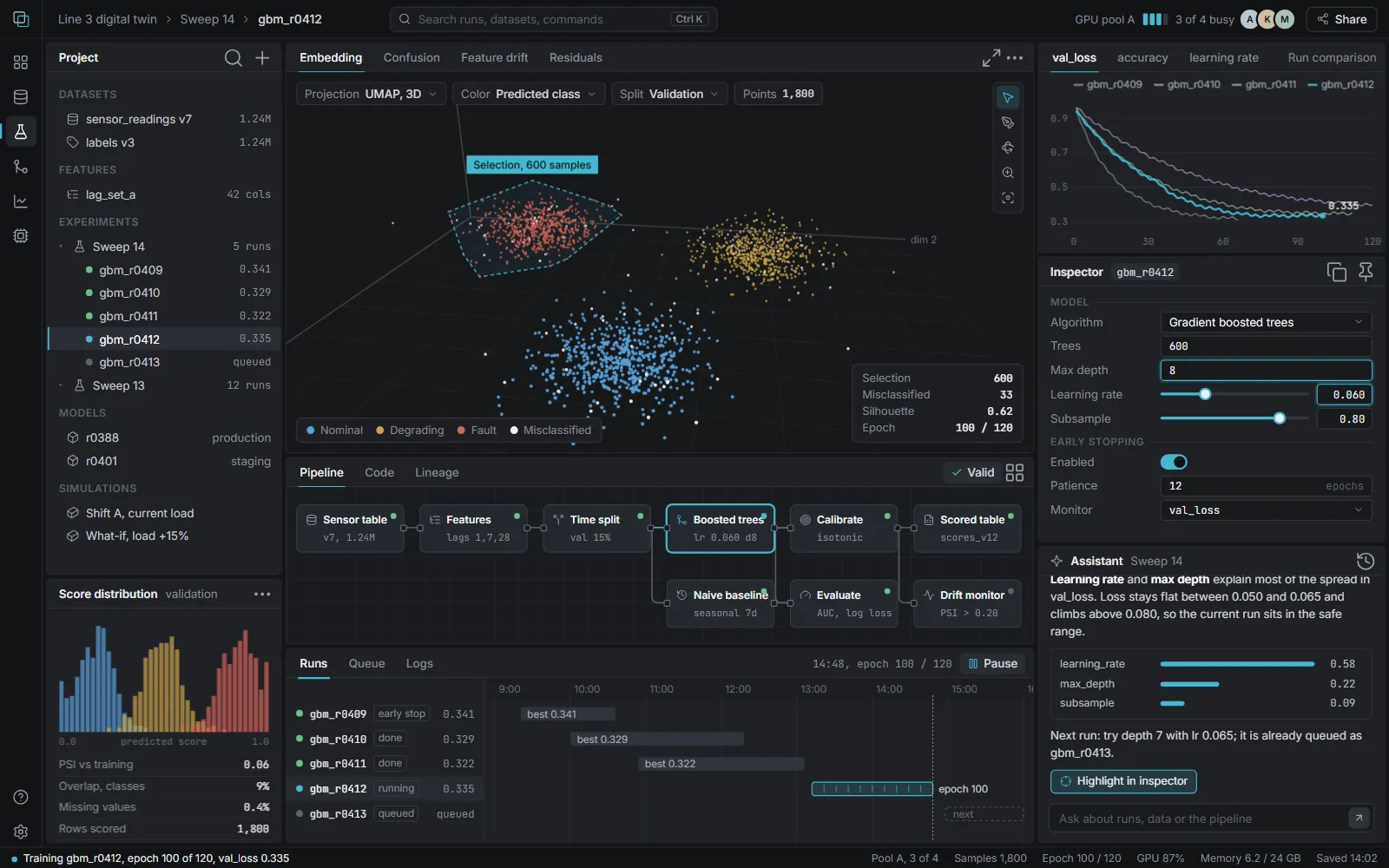
In the recording, a learning rate is adjusted, a drift monitor is added to the pipeline from the command bar, training resumes until early stopping, and the assistant explains which settings mattered in the sweep, pointing to the fields it read. Nothing in the answer is invented: each claim links back to a run or a step.
We build this kind of workspace when a client's team trains models regularly and needs decisions about which model ships to be traceable. It runs on the client's infrastructure and connects to the tools the team already uses.
Demonstration build with generated data. It runs in your browser: open it full screen.
What you get
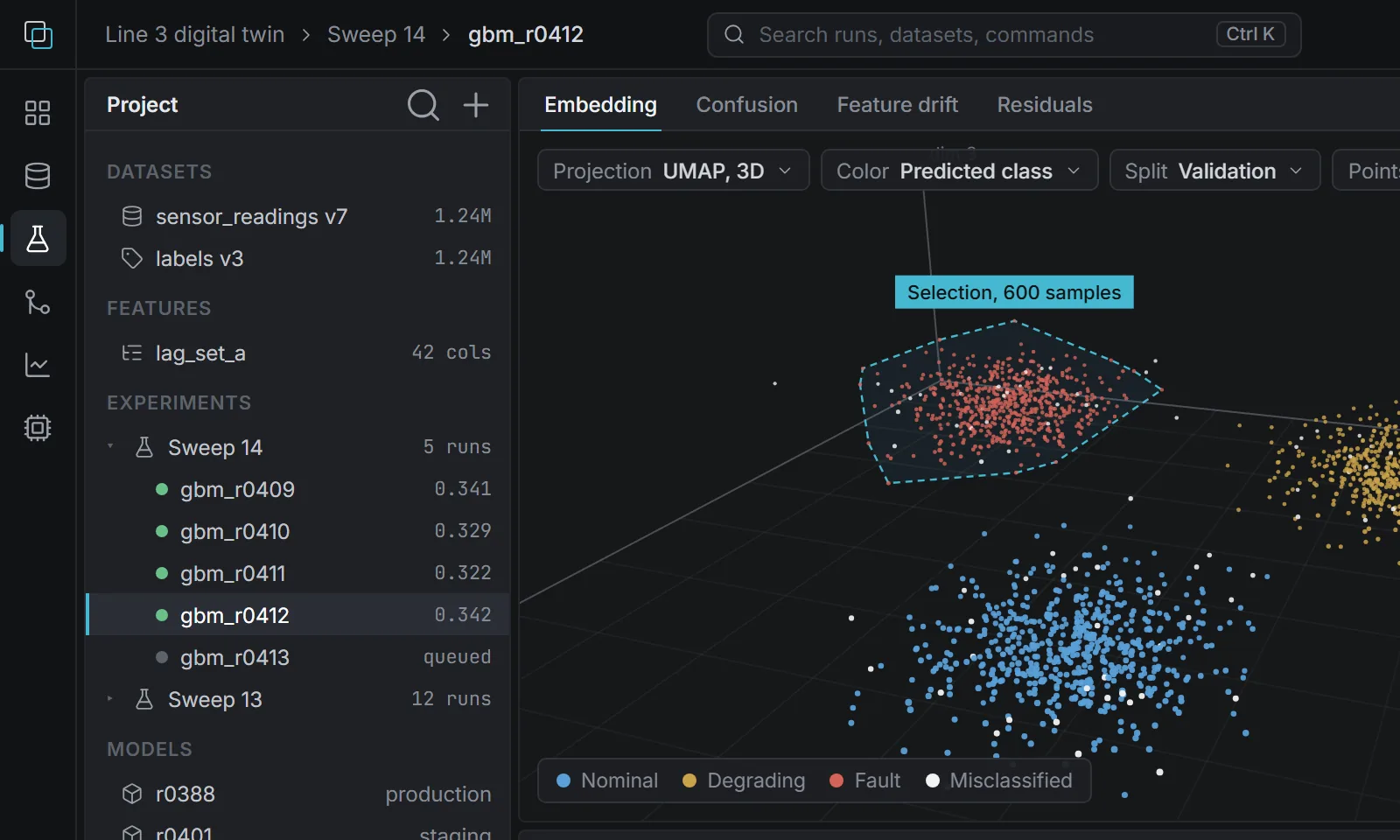
- 01A project tree of datasets, features, experiments, models and simulations
- 02A pipeline graph from source table to scored output, with a naive baseline wired in
- 03Every run on a timeline, with its curves compared to the others
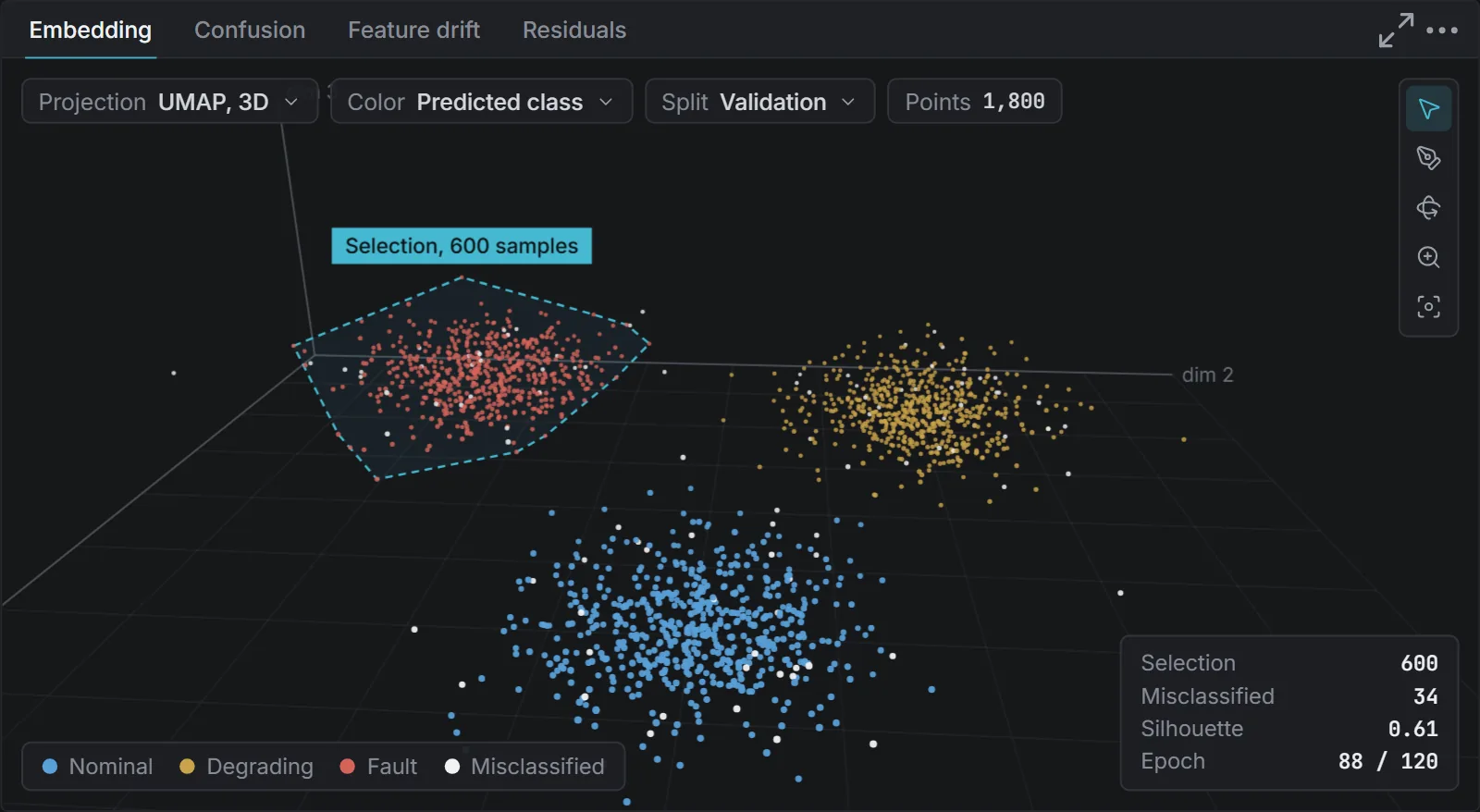
- 04An embedding view of the validation data, coloured by predicted class
- 05An inspector to change a model's settings and re-run
- 06An assistant that answers questions about the runs and cites what it read
How we work
Every model is tested on data it has never seen: a sealed test set, opened once. Each result comes with its margin of error, and the code is handed over to you.
Have a project like this one? Tell us what you need in a few lines.
Send us the briefAlso in this section
- Demand planning softwareA demand planning tool where statistical forecasts, the team's consensus and the alerts that need a decision sit in one grid.
- Customer records and pipelineA CRM built around how your team sells, from first contact to signed deal.